
From 20 to 22 October 2026, INFORMEST participated in the third Exchange of Experience of the CAPABLE project in Vaslui, Romania. The project is funded by the Interreg Europe programme, while the event was hosted by Vaslui County Council.
Within the project, INFORMEST provides operational support to the Autonomous Region of Friuli Venezia Giulia, CAPABLE’s Lead Partner, contributing to project coordination, management and communication activities. The participation of the INFORMEST team in the three working days supported the partnership’s exchange of regional experiences and provided an opportunity to explore solutions adopted across European territories to make long-term care more accessible, sustainable and responsive to people’s needs.
The meeting focused on the semester theme, “Costs for Public Administrations and Families”, with particular attention to the financial impact of care on public administrations and households. National and local authorities, public administrations, service providers and civil society organisations shared policies, organisational models and practices supporting older people and caregivers.
The Romanian experience offered an important perspective on the pressure that population ageing places on social and healthcare systems. According to data presented by the Romanian National Agency for Payments and Social Inspection, approximately 3.7 million people over the age of 65 live in Romania, representing 19.2% of the population. By 2050, this proportion could reach 27.7%.
More than 5,895 social services are accredited in Romania, while 823 services are dedicated to home care. These figures highlight the need to expand the capacity of care systems while ensuring quality, accessibility and financial sustainability.
Representatives of Vaslui County presented the strategies adopted at territorial level to strengthen care for older people. In an area where older people account for approximately 26% of the population, the main priorities include assessing needs, strengthening local networks and developing home and community-based services capable of preventing or delaying institutionalisation.
The three-day event strongly emphasised the importance of a qualified and adequately supported workforce. Caritas Huși presented more than 25 years of experience in home care, developed through nine authorised centres operating in over 40 communities. The ADAPT project demonstrated the value of training, having involved more than 6,300 formal and informal caregivers working in urban and rural areas.
The exchange also explored integrated, person-centred models in which social care, healthcare services, home support and outpatient interventions contribute to coordinated responses. Particular attention was also devoted to active ageing, prevention, telemedicine and digital tools that can support autonomy and quality of life.
The partners shared experiences developed in their respective territories and assessed practices that could be transferred or adapted to other regional contexts. The discussions also introduced the theme of CAPABLE’s following semester, dedicated to innovative care solutions, including artificial intelligence, home automation, telemedicine and the involvement of start-ups.
The third day was devoted to study visits to day-care, home-care, housing and residential services in Vaslui and Huși. For the INFORMEST team and the other partners, the visits provided an opportunity to observe directly how local policies are translated into practical measures supporting older people.
The experience in Romania confirmed the value of the interregional learning promoted by CAPABLE. Exchanges among public administrations, service providers and local organisations help identify solutions that combine economic sustainability, service quality and a person-centred approach.
Through its operational support to the Autonomous Region of Friuli Venezia Giulia, INFORMEST contributes to this European cooperation process by facilitating knowledge exchange and the development of more effective public policies to address the consequences of demographic change.
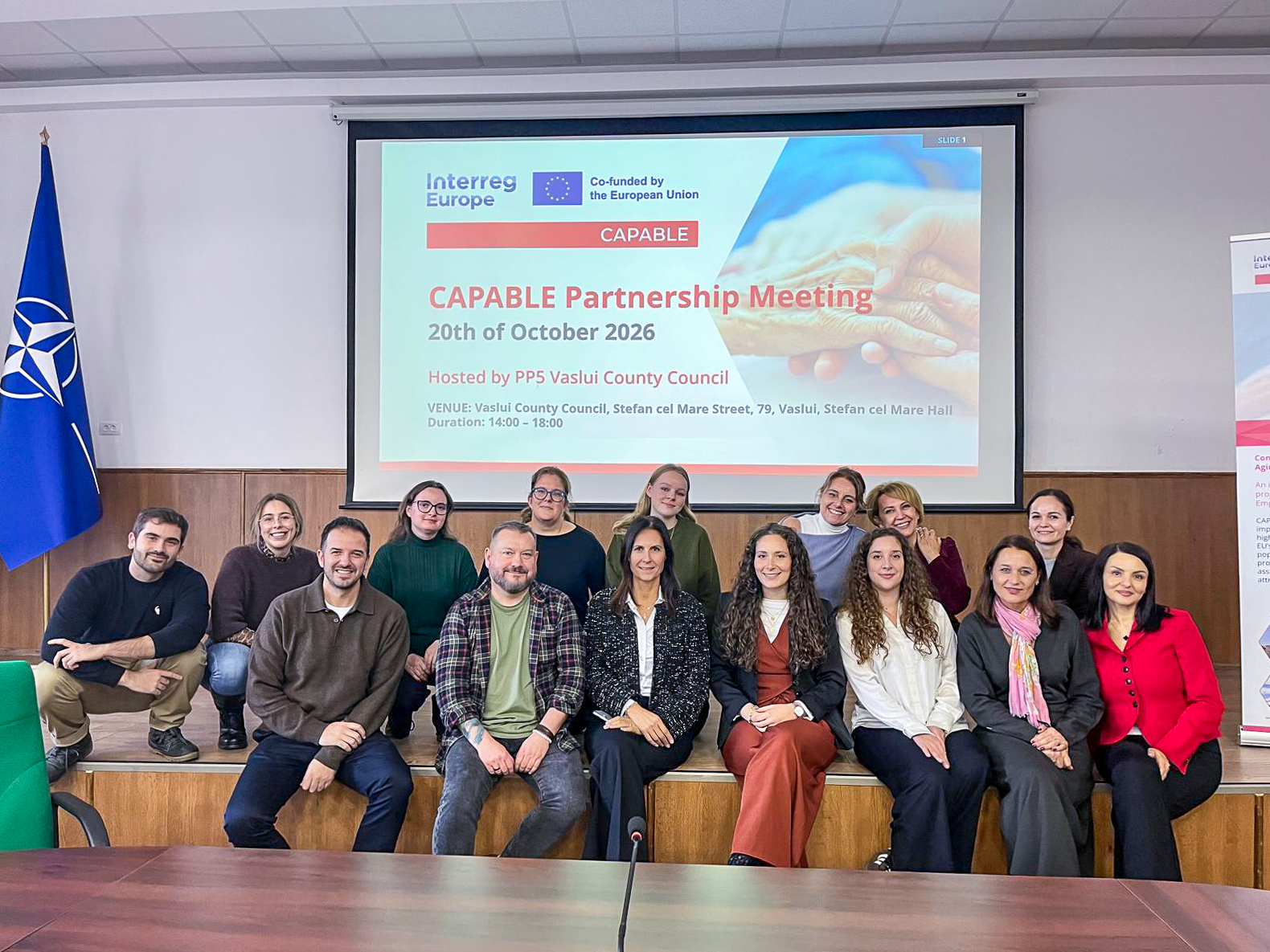
INFORMEST in Romania for CAPABLE’s Third Exchange of Experience
https://www.interregeurope.eu/capable

CAPABLE addresses the challenges posed by an aging population and caregiver shortages in Europe. By focusing on the EU Care Strategy, it aims to enhance social care careers through upskilling, attracting new talent, improving service quality, and promoting worker mobility. The project recognizes the urgent need for 4.3 million care workers by 2030 across Europe.